
Ayurveda is famous for its wonderful rejuvenating massages. One of such very effective massages is Abhyanga. It is a traditional Ayurvedic massage that includes the use of herbal oils that get soaked into the deepest cells and tissues and rejuvenate the body, mind, and soul. In this blog, we will discuss “what are the seven positions of Abhyanga?” We will understand the various Abhyanga massage positions used during the whole process. Every movement of Abhyanga is not random but has a medicinal purpose!!
This treatment uses different types of herbal oils, which are selected as per the individual's body type and Tridosha constitution. A systematic Abhyanga massage flow is followed, depending on the different cases and ailments. One of the most unique aspects that every aspiring Ayurvedic therapist and practitioner wants to explore is the seven-position technique of Abhyanga!
When you go for an Abhyanga, the therapist will ask you to change your positions as per their guidance to enjoy the best benefits of Abhyanga. These positions ensure effective massage to different parts of the body and different muscle groups and joints. This helps in attaining overall well-being.
So, let's start our full-body Abhyanga guide!!
- What are the 7 positions of abhyanga Massage?
- 1. Sitting Position Abhyanga
- Benefits of this Position
- 2. Supine Position Abhyanga
- Benefits of the Supine Position
- 3. Left Side Lying Position
- Benefits of the Left Lying Position
- 4. Prone Position
- Benefits of the prone position
- 5. Right Lying Position
- Benefits of the Right Side Position
- 6. Back to the Supine
- Benefits of Back to Supine Stage
- 7. The Back to Sitting Position
- Benefits of Final Sitting Position
- What are the massage techniques used in all seven Abhyanga positions?
- Conclusion
What are the 7 positions of abhyanga Massage?
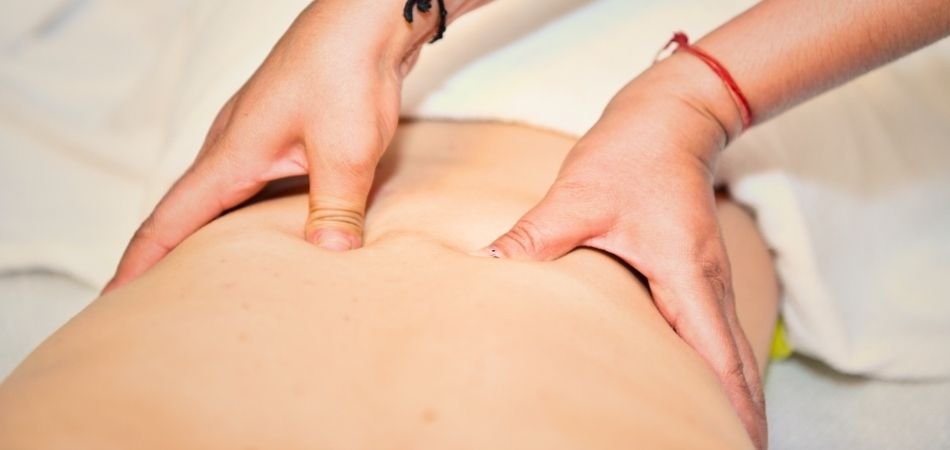
Most of you might be thinking that Ayurvedic oil massage is only about applying herbal oil all over the body. But actually, it is much more than that. It includes a unique methodology preserved in the ancient Vedic scriptures. Every hand movement holds a unique advantage for the body.
Different types of ailments are given different types of bodywork. The different areas of the body require different types of massages. Therefore, in Abhyanga, there are various Abhyanga massage positions. When a proper order is followed along with the natural flow of therapy, the body heals right from the root cause.
Before moving towards the seven positions of Abhyanga massage, let's understand the benefits of Abhyanga positions.
-
Multiple positions in Abhyanga help the therapist to reach every part of the body during the massage.
-
Even pressure can be applied throughout the session when the client changes the position.
-
Muscle groups receive required massages following a natural direction.
-
All the major joints, muscles and tissues are covered by using different Abhyanga massage positions.
-
Oil can be distributed equally by using different Abhyanga massage positions.
-
Different positions of Abhyanga massage make the therapy much more rejuvenating and relaxing.
1. Sitting Position Abhyanga
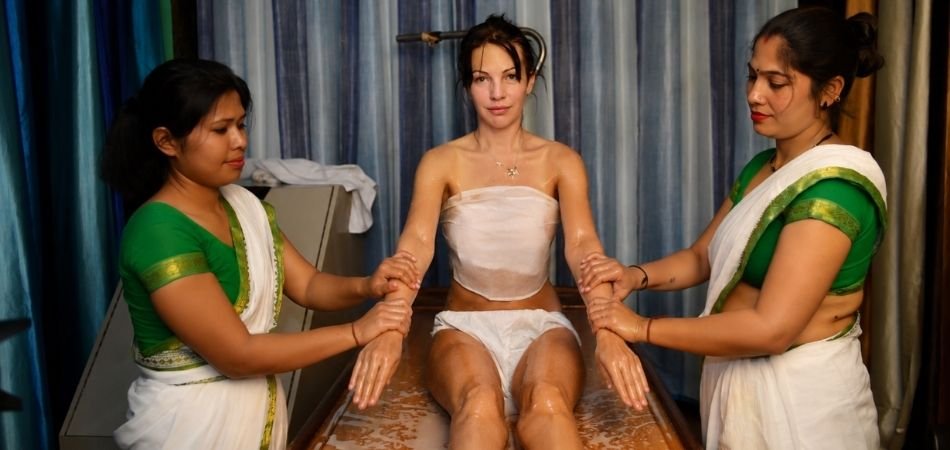
When you go for an Abhyanga massage, the very basic and the beginning position is the sitting position!! You will have to sit very comfortably on the therapy table. In this position, the massage is usually given on the head, scalp, shoulder, neck, and upper back.
Warm herbal oil is applied in these areas and massaged using the hand and fingers in circular motions. The therapists also massage the ears, forehead, temples, and the different muscle groups present in the upper region. When Abhyanga starts in the sitting position, the whole body starts moving into a state of relaxation. This is just like a warm-up in an Abhyanga session.
Benefits of this Position
-
Better scalp health
-
Reduced stiffness around the neck and the shoulder region
-
Relaxed muscles in the upper region
-
Better mental health
-
Wonderful position for the next transition
2. Supine Position Abhyanga
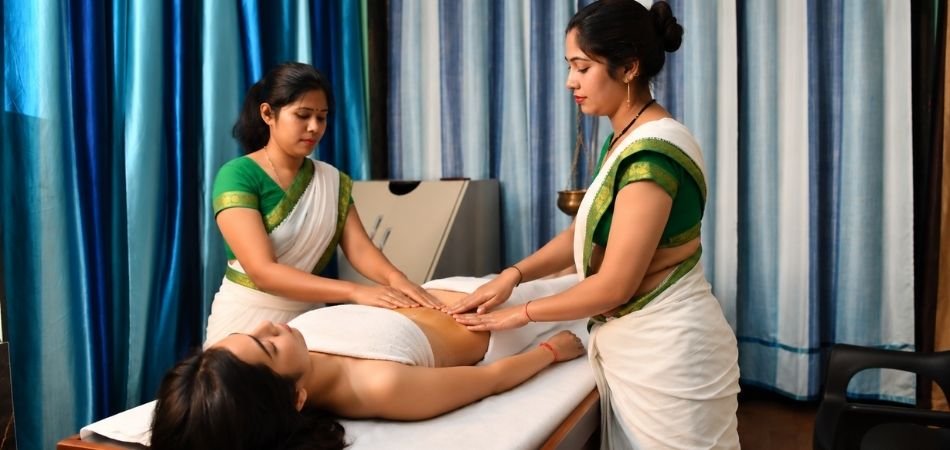
Now, the next position in the Abhyanga massage procedure is the supine position. In this position, the client has to lie on their back on the therapy table!!
After the head and shoulder massage is completed, the client has to lie flat on the table. Now the massage is given on the front side of the client's body.
During this massage, warm herbal oil is used, and it is applied to different sections of the front body. The therapist gently spreads the oil to all the areas, ensuring that the oil is soaked into the deepest tissue and is distributed evenly throughout the body.
This massage usually covers the area like chest, arms, hands, abdomen, fingers, thighs, knees, legs, front, ankles, as well as the feet. In this position, strokes are longer as compared to the sitting position because here the muscles,d joints and ligaments are larger and thicker.
Benefits of the Supine Position
-
A gentle massage of the abdomen
-
Better digestive health
-
Better health of the legs
-
Good skin health
-
Pain relief in the front body
-
Great massage of larger muscles
3. Left Side Lying Position
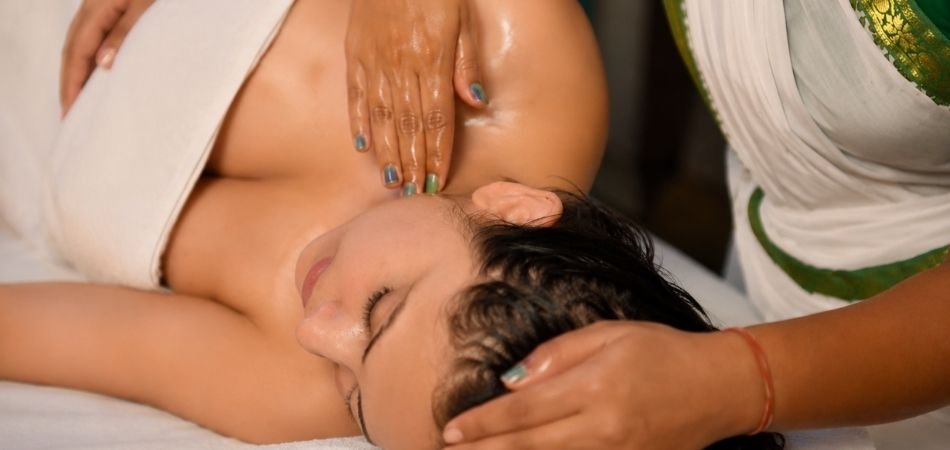
After the front side massage is done, the client is turned to the left side. In this position of Abhyanga, the left side of the body is massaged because, in the lying position, it becomes difficult to massage the sides.
In this position, the therapist will apply oil and massage one side of the body, including the hips, waist, back, shoulder, and even the outer side of the leg. In this stage, the left shoulder, left side of the rib cage, left side of the waist, left side of the hip, outer thigh of the left side, calf, ankle, as well as its knee are included. In this position, longer strokes are given because the muscles are longer.
Benefits of the Left Lying Position
-
Great natural massage of the side muscles
-
better health of the hip joints
-
good waist health
-
A better balance of the whole treatment
4. Prone Position
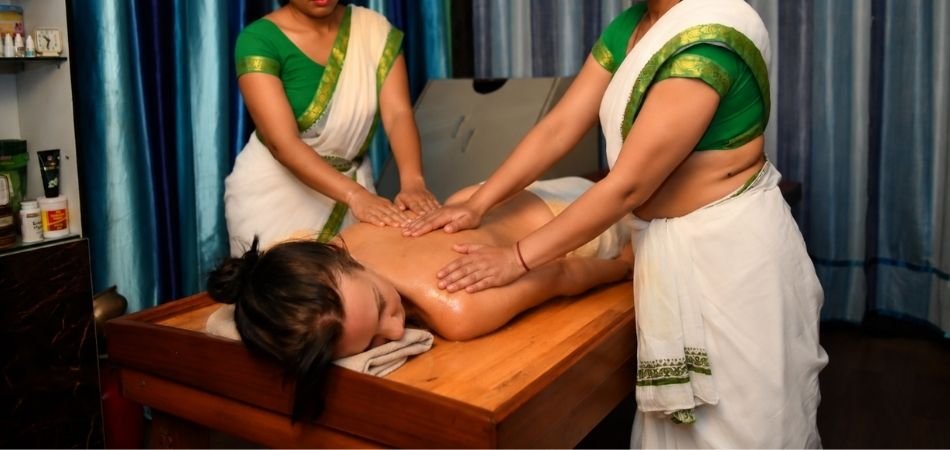
Now, after completing the left side of the massage, the client has to lie on their stomach. In the Abhyanga, this is one of the longest and most vital positions because the largest muscles and bones are present in the back side of the body.
Here, the therapist will massage the whole back, including neck, upper back, middle back, lower back, spinal cord, hips, back thighs, back hamstrings, calves, heels, as well as the soles of the feet.
This is one of the longer-duration processes in the whole Abhyanga massage. Long glides with warm herbal oils make it highly rejuvenating and relaxing. Special rhythmic and circular movements are used in this part of Abhyanga.
Benefits of the prone position
-
Full body massage
-
Full body health
-
Removal of stiffness and stress from the back body
-
Better muscle health
-
Better nervous system health
5. Right Lying Position
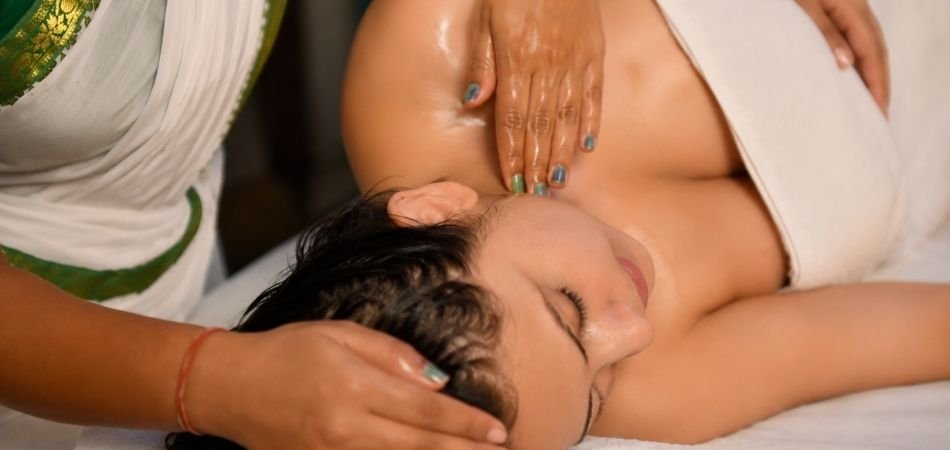
Once the back massage is completed, the client has to lie on their right side. So, if you are also going to take an Abhyanga massage after the back massage, you will be asked to turn to your right while lying on the table. Here, the focus is on the right side of the body because that is the area that has not yet been massaged.
In this, the strokes, glides, and movements are just like the left side position. Equal attention is given to the right side as it is given to the left side of your body. In this position, the massage is given on the right side of the shoulder, right side of the chest, right side of the hip, waist, knee, outer thigh, calf, ankle, leg, etc.
Since Ayurveda prefers balance, Abhyanga tries not to skip any part of the body during the massage. This is why every region and every side of the body is equally massaged for better balance and uniform pressure.
Benefits of the Right Side Position
-
Better health of the right side of the body
-
Equal distribution of the oil
-
Equal health benefits to the whole body
-
Better joint health
-
Better health of the right side muscles
-
Removal of stiffness from the right region of the body
6. Back to the Supine
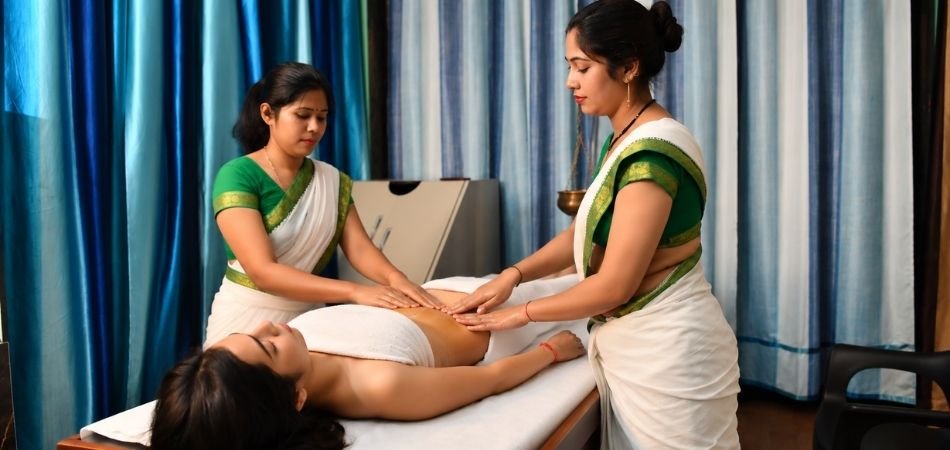
Now, one of the important steps of Abhyanga massage is this step, where clients need to come back to the supine position. After both sides, back and front massages are given, you have to lie again on your back.
Now, in this stage, the herbal oil, which is left on the front side during the earlier stage,is spread evenly, and the remaining oil is absorbed in the body. This marks the completion of the treatment. Special attention is provided to the massage of hands, palms, fingers, feet, ankles, chest, knees, and shoulders during this position.
In short, the front body is massaged again with the remaining oil which has not yet been absorbed!! Proper absorption of the oil in the front body is focused on in this stage.
Benefits of Back to Supine Stage
-
A final front body massage
-
Deeper oil absorption
-
Longer massage ensures better muscle health
-
Better circulation of the body
-
Better circulation of blood
-
Better physical and mental health
7. The Back to Sitting Position
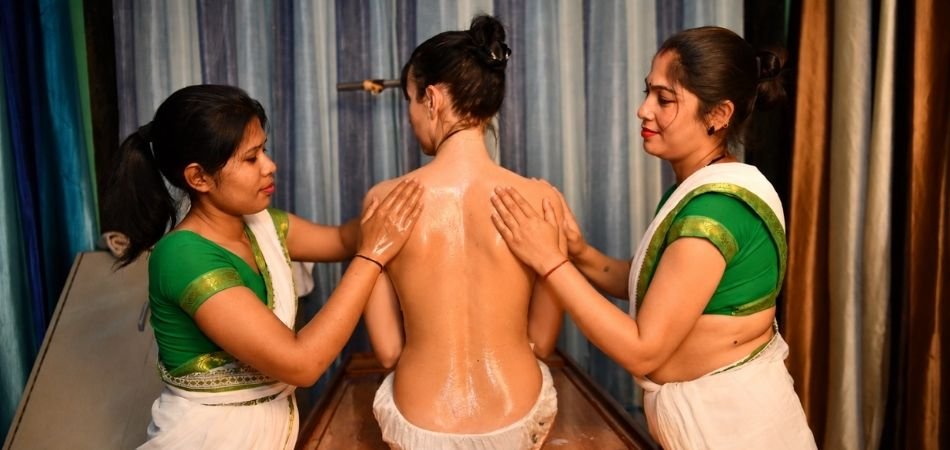
Now, after the above six positions are complete, the client will be asked to go back to the sitting position. Now, if you are taking an Abhyanga massage, you have to sit comfortably on the table.
This is a very short stage, shorter even than the first one. In this, the therapist will again gently massage your head, neck, shoulder, upper back, and scalp to give a final complete touch to your top and upper side of the body.
If there is any excess oil remaining on your head or the upper body, it will be evenly spread, and a gentle massage will be given again for final benefits.
Benefits of Final Sitting Position
-
Completion of the whole Abhyanga massage
-
Absorption of any left-out oil
-
A final massage on the upper muscles
-
better nerve health
-
Enhanced sense of relaxation and rejuvenation
-
Full body balance
What are the massage techniques used in all seven Abhyanga positions?
So now you might have understood that Abhyanga massage is not given in just one position. The client or the patient needs to change the position to ensure full body coverage and even distribution of warm herbal oil and inner body balance. In different areas of the body, different kinds of pressure are applied.
Larger muscles receive long strokes, while circular movements are used when massaging the small joints or the small groups of muscles.
So the most common movements used during the Abhyanga massage are as follows:
-
For larger muscles, long strokes, which are gliding in nature are used
-
For small joints, circular Abhyanga movements are used
-
Gentle pressure is given where the tissues are soft
-
A rhythm is created when the body is massaged from the top to the bottom
-
Warm oil is continuously applied to ensure better gliding and more relaxation
-
The techniques ensure a good flow throughout the massage therapy
-
The strokes, type of oil, and movements differ from body to body and treatment to treatment
Also Read: Abhyanga Self Massage Methods and Benefits
Conclusion
Abhyanga is one of the best Ayurvedic massages. It has been used since ancient times to ensure different health benefits to humans. This massage not only offers physical benefits, but it is also great for mental and emotional rejuvenation.
Those dealing with stress, anxiety, depression, insomnia, etc., can also benefit from the seven-position Abhyanga massage. It is a full-fledged Ayurvedic massage that offers health benefits right from the head to the toes. Different types of positions are included in this massage. There are seven major positions usually used in any Abhyanga massage. Every position has its own uniqueness and benefits!!!
Every position includes a different type of movement and oil application. These positions have different durations. The durations and the positions vary from person to person and the purpose of and according to the purpose of the treatment. Abhyanga massage is not only a part of any treatment, but it can also be taken for daily wellness. If you want to experience the best Abhyanga massage in Rishikesh, then Haritha Ayurveda welcomes you!!!





Comments (0)