
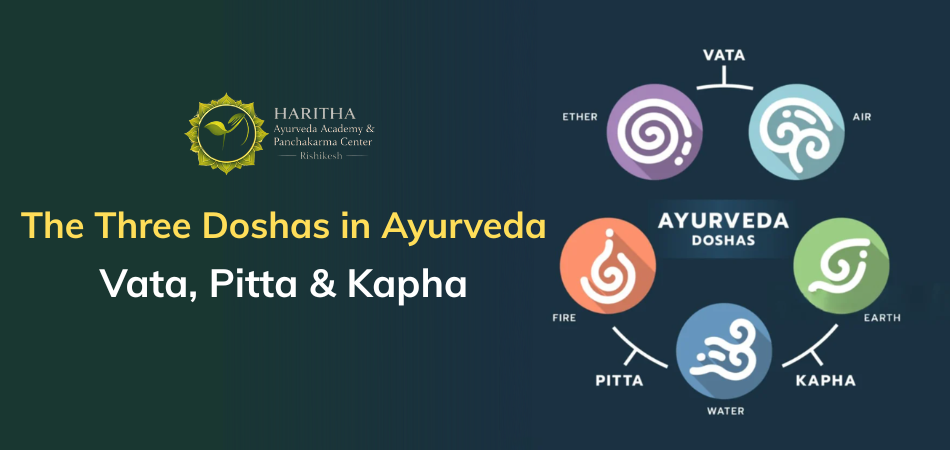
Three Doshas in Ayurveda: Understanding Vata, Pitta & Kapha
Ayurveda is not just a healing system of ancient India; it is proper guidance to the human race on how humans can live healthily in the most natural way. It is a method of bringing harmony to our body, soul, and mind. It not only focuses on treating the ailments of modern times, but it also helps in preventing them by maintaining the inner balance. There are several courses, like the Ayurveda diploma course in Rishikesh and other parts of India offer a deep insight into Ayurvedic doshas and how they help in balancing the body and mind naturally.
Now, when we talk about Ayurveda, the concept of doshas is very common and the most important part of it. Ayurveda says that there are certain energies present in a human body that monitor and control the body's functions and the reactions of our mind. For any kind of treatment or preventive measures in Ayurveda, one needs to understand the body type, which is based on dosha. When one understands the body, it is very easy to take care of it holistically using herbs and various rejuvenating therapies. This is why even if you join a retreat or take an Ayurvedic treatment in India or even join an Ayurveda teacher training course, it will all start with a proper diagnosis of the doshas present in the body.
In this blog, we will understand the Ayurvedic doshas and their role in the human body!
- What are the Three Doshas in Ayurveda?
- What is Vata Dosha?
- The method of balancing Vata naturally
- What is Pitta Dosha?
- How to Balance Pitta?
- What is Kapha Dosha?
- Signs of imbalanced Kapha:
- How to Find Your Dominant Dosha Type?
- What is the importance of dinacharya in Ayurvedic dosha balancing?
- What is the importance of sleep in dosha balancing?
- How to manage stress with dosha awareness?
- Final thoughts
What are the Three Doshas in Ayurveda?
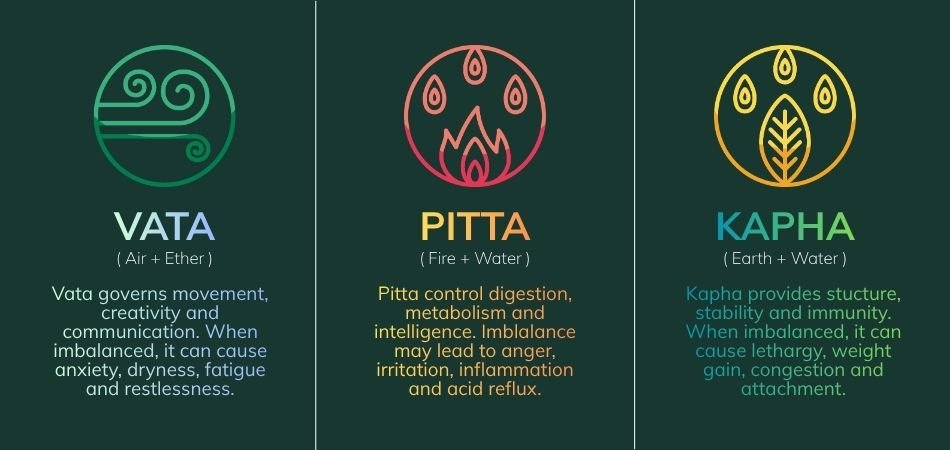
As per Ayurveda, the human body is made up of the five important elements: air, fire, water, space, and earth. These elements come together in the human body to form three types of Doshas.
-
Vata Dosha. It is a combination of air and space.
-
Pitta Dosha. It combines the water element and the fire element.
-
Kapha. It combines water and earth elements.
These Doshas are not just a written theory or a myth, but they are the actual energy that guides the whole body and are responsible for the physical and psychological traits of a human body. The Dosha type of the human body is the basis of individuality.
Right from the gut health to our breathing system, right from our physical health to our emotions, everything is influenced and guided by these Doshas. Every person has all three Doshas, but the proportions in the different bodies are different. This is what makes you unique. The study and diagnosis of this unique combination is known as the body type assessment.
What is the importance of Tridoshas in balancing the mind and body?
Now, these doshas are three in number, which is why they are known as Tridoshas.
In Ayurveda, health is represented by balance. If our inner balance is good, our health is good. If anything like a sedentary lifestyle or modern living affects the balance of our inner health, it can lead to various health problems like mental diseases, physical ailments, and emotional problems.
The signs that reflect that your doshas are balanced are as follows:
-
When your doshas are balanced, your gut is very smooth, and you do not face any kind of gut-related issue.
-
Your energy level throughout the day stays stable and good when your three doshas are well-balanced.
-
Your mind is free from any kind of stress or anxiety, and you always feel calm if your doshas are balanced properly.
-
You are immune to various modern-day problems and ailments. Your immunity is very strong when your doshas are balanced.
But when even one of these three doshas starts losing its balance, the problem begins.
-
You start feeling tired without any reason, even after resting.
-
Your mood keeps on changing, and you suffer badly with stress, anxiety, and other mental health problems.
-
Your body starts giving you signals like unnecessary body pain, heaviness, dryness, etc.
The symptoms of different types of Tridosha imbalance are different, but these are some of the common signs that your body is losing its balance. Balance is not something that can be fixed by taking some pills. It needs a change in the whole lifestyle, which includes the various concepts that are used in balancing the three doshas in Ayurveda.
-
You have to watch what you are eating.
-
Your diet should be according to your body constitution and aim to balance a particular dosha.
-
You have to check on how you are living, your lifestyle and daily routine, because Ayurveda focuses a lot on Dinacharya.
-
The weather around you also affects your three dosha balance.
-
The level of stress in your life can also determine the balance of your doshas.
Therefore, you have to learn and live in a very natural way. You can take the help of Ayurveda, which includes various Ayurvedic therapies for the tridosha balance, or the best Ayurvedic treatments for tridosha balance. You can choose the best Ayurvedic centres in Rishikesh or anywhere else in India for balancing Ayurvedic doshas or learning about it to work professionally.
What is Vata Dosha?
When we talk about Vata Dosha, we mean the energy that is responsible for the movement. It is something that is responsible for our breathing process, the blood circulation, oxygen circulation, and even the circulation of our thoughts. People with traits of Vata Dosha are as follows:
-
People with Vata dominance in their bodies are slim and light in weight.
-
They are very active and quick in nature.
-
People with dominant Vata are very creative and have great intuition and imagination.
-
This is why they are often found to be working in a creative field.
But when this Vata goes out of balance, it can make a Vata person anxious and unstable very quickly. The different signs of Vata imbalance in the human body are as follows:
When your Vata is increased, you will see symptoms like:
-
Dry skin or dry lips
-
Constant feeling of constipation or gut problems
-
Unnecessary anxiety, unnecessary overthinking
-
Poor sleep quality or problems like insomnia.
-
You will always feel scattered.
-
Your mind is always running, and you are always thinking, even while sleeping.
The method of balancing Vata naturally
Vata means air and space. This is why when Vata is aggravated or out of balance, it needs the sense of warmth and something that is stable. So, to balance your Vata, you should follow the following key steps:
1. Try eating freshly cooked, warm, vegetarian food to balance Vata.
2. Stick to a routine that you can follow daily, like going to bed and waking up early.
3. Never try to skip meals. Always take a healthy and balanced diet.
4. Practice meditation for balancing your mental health.
5. Yoga and other holistic healing practices can also help.
6. Ayurvedic therapy for Vata balance can help greatly.
7. Oil massages for Vata balance.
8. When Vata is out of balance, try a slow lifestyle.
What is Pitta Dosha?
Pitta mostly reflects a sense of heat within the body. It is responsible for our gut health, our metabolism, and the heat of the human body. People who have a Pitta-dominant body type are often found to be very intelligent and focused. They are very good decision makers. People with Pitta Dosha dominance are confident naturally. But when this Pitta gets out of balance, it can turn into unnecessary irritation, agitation, and a feeling of constant anger, which can further result in various physical, emotional, and mental ailments.
The Signs of Pitta Imbalance in the Human Body
-
When the Pitta is imbalanced in the human body, it can result in acidity.
-
Heartburn becomes a common problem in Pitta imbalance.
-
Skin problems like acne and pimples can arise when Pitta is imbalanced.
-
You will always feel quite hot, even in a cold environment, when your Pitta is imbalanced.
-
People with Pitta imbalance get impatient very fast.
-
Anger and agitation are also the signs of Pitta imbalance. Pitta, when imbalanced, can affect emotional as well as physical health.
How to Balance Pitta?
Pitta represents heat, which is why, when it is too much, it can be reduced only by calmness and coolness. To balance your Pitta, you can follow the following steps:
-
Start eating food that is cold in nature, like seasonal fruits and salad.
-
Avoid heavy, spicy, and fried food.
-
Take out time to spend in a calm environment, like in a cool breeze, with birds chirping around, etc.
-
Start practising deep breathing at least 10 minutes before you begin your day. Try journalizing your thoughts and letting go of things to control your anger and slow yourself down. This will help in balancing Pitta most naturally. You can also take the help of Ayurvedic treatments for balancing Pitta, like therapies, massages, and herbs.
What is Kapha Dosha?
Kapha is responsible for the structure of the individual's body. It also controls the level of strength in the body.
People with Kapha dominant will have the following qualities:
-
Kapha-dominant people are strong in body build and are steady.
-
They are very calm in nature and quite supportive.
-
Kapha-dominant people are often seen as quite emotionally balanced.
But when Kapha is too much, it can lead to problems like heaviness in the body and unnecessary obesity.
Signs of imbalanced Kapha:
-
People with Kapha imbalance often suffer from unnecessary weight gain.
-
They often feel lazy, and their motivational level is also low.
-
They often suffer from problems like cold, flu and congestion.
-
They look dull and always feel stuck in life.
Kapha is stagnant. That is why to balance it, you need movement in your life.
Some of the tips that can help you in balancing your Kapha naturally are as follows:
-
You should start practising yoga, meditation and pranayama daily.
-
Try eating light and warm meals.
-
Do not overeat.
-
Quit heavy, spicy, rajasic or tamasic type of food.
-
Always wake up early in the morning.
-
Practice a healthy dincharya.
In short, the best key to balance Kapha is practising activeness.
How to Find Your Dominant Dosha Type?
Well, a proper diagnosis is required to identify one's dosha constitution. It is taught in the Ayurveda diploma course in Rishikesh, and other such courses are available. But some ways can help you to give a basic understanding of your body type. Now, to understand your dominant dosha, you need to look at the following:
-
The type of body structure you have
-
The digestion that you are having
-
Your dominant emotions and the level of energy you feel.
For example, if you are a vata-dominant person, you will be thin, creative, and restless in nature.
If you are a pitta-dominant person, you will be warm, intense, and sharp in nature.
If you are a kapha-dominant person, your body build will be a bit heavier, and you will be steady and calm.
Some people have one dominant dosha, while others may have a mix of two doshas. So, a proper diagnosis is required to assess the dosha. The importance of diet in Ayurvedic dosha balancing. Ayurveda and fog go hand in hand. Ayurvedic wellness can never be achieved if you are not following the Ayurvedic diet prescribed to you. Food is the best way to bring the body into balance naturally.
In modern times, we are eating whatever we get. We are eating fried items, junk food, Tamsic and Rajasic food, which often keeps on imbalancing our Dosha until they start speaking loudly. This slowly and gradually keeps on degrading our immunity, our energy levels and in turn our Doshas lose their balance completely, leading to various lifestyle problems, sickness and chronic diseases. But do you know that just by eating right, you can solve half of your problems?
Now, if you are a Vata dominant person or your Vata is imbalanced, you should eat warm, soft food with little healthy oil and try to avoid food that is dry in nature or cold. This will help to protect your Vata from being imbalanced.
To balance Pitta, you should eat cooling food that is not spicy. Always try to avoid food items that are fried, acidic or heavy in nature.
For Kapha balance, try to eat light, spicy, warm food and avoid sweet dishes or heavy meals. Eating mindfully will really help one in keeping the doshas in check.
What is the importance of dinacharya in Ayurvedic dosha balancing?
Now, dincharya is very important in balancing doshas. In order to balance your doshas, you need to follow the following dincharyas or routines.
-
Try to wake up early in the morning
-
Start your day by drinking water
-
Perform light exercises like yoga
-
Pranayama and meditation
-
Always eat a meal on time
-
Try to sleep before 11 p.m
A good Ayurvedic routine often blesses you with stability, and this stability will help you in gaining the balance of doshas.
To learn more about dincharya (Yogic lifestyle) explore our complete guide to Dinacharya, the Ayurvedic daily routine
What is the importance of sleep in dosha balancing?
Sleep is the time when our body starts repairing itself. Now every dosha reacts a bit differently to our quality of sleep.
-
Vata dosha is often associated with sleep, which is disturbed and light in nature.
-
Pitta dosha dominants often lead to a moderate quality of sleep with too many dreams.
-
Kapha dosha often leads to deep, heavy sleep, which is undisturbed.
In order to improve your sleep quality, you should avoid screen time before bedtime. Try eating a light dinner at least 2 to 3 hours before going to bed. Always maintain a sleep time which is fixed in nature. Good sleep will help in balancing the body and mind, which in turn will help in keeping the doshas balanced.
How to manage stress with dosha awareness?

When dosha is imbalanced, stress is either the reason or the result. This is why controlling stress is very important if you want to heal naturally. Now, different types of doshas have different types of stress. When stress is due to vata, it can lead to unnecessary anxiety.
-
When stress is due to pitta, it can lead to unnecessary anger.
-
When stress is due to kapha imbalance, it can lead to a sense of depression or withdrawal.
-
Now, to manage these doshas for stress relief, you can follow the following tips:
-
If you are a vata person and are having stress
-
You should perform some activities that are grounded in nature.
-
If you are having a pitta dominance, then you can perform practices that are cool and calming in nature, like bhramari pranayama, meditation, etc.
-
If you are a kapha-dominant person, then you should perform some energising actions like vinyasa yoga flow or power yoga.
Final thoughts
Ayurveda is never about following rules that are strict in nature. It is just about being aware of our body, catching every single thing that is given. Even when you sneeze, it is a sign that you need to watch out carefully. Ayurveda helps in listening to our own body and understanding the signs it's giving so that we can do the needful.
For example, our body always signals us when it is tired, when it is hungry, or if it needs rest. The problem arises when we start ignoring signals and are busy in our daily lives. So, find the best Ayurveda centre in Rishikesh, like Harita Ayurveda, and start your journey of Dosha balancing.










Comments (0)