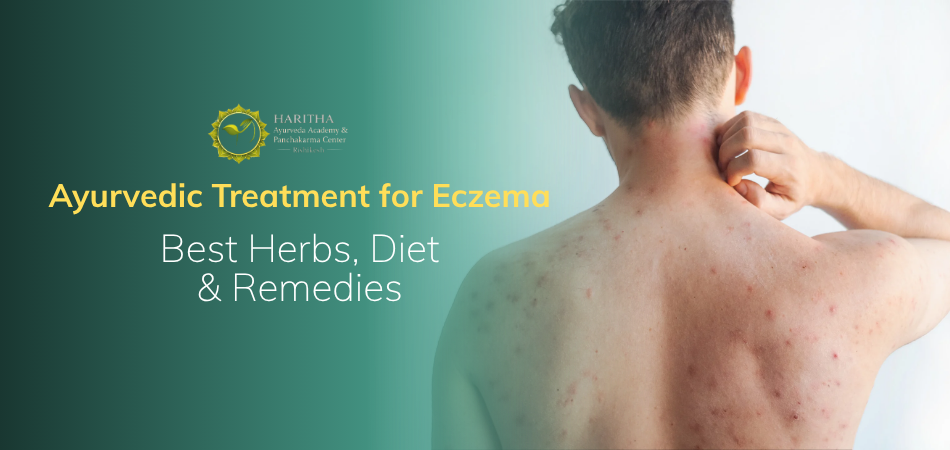
Eczema is a skin condition or skin disorder. In this, the skin becomes inflamed and causes repetitive symptoms like dryness, redness, rashes, cracked skin, and more! Ayurvedic treatment for eczema offers a holistic way to heal it right from the root cause. In some people, eczema can be the dry patches on the skin, while for others, it can be inflamed and too painful.
This is just not a physical disease, but it is something that discomforts you both on an emotional and mental level. It can reduce sleep quality, confidence, and everyday comfort. Over-the-counter creams and modern medicines might calm the symptoms for some time, but they may return after stopping these medicines. In this case, Ayurveda can help with long-term benefits. Ayurvedic science approaches treating eczema in a very different way. It finds the root cause of eczema and addresses that.
Instead of considering eczema as a skin disorder, Ayurveda treats it as an imbalance within the body. As per the classical Ayurveda, skin is the reflection of whatever is going on inside our body. Skin diseases occur because of poor digestion, poor blood quality, poor tissues, poor immunity, emotional imbalance, and imbalanced doshas.
In this blog, we will understand everything about eczema. We will uncover the Ayurvedic treatments for Vicharchika!
- What is Eczema in Ayurveda?
- How does Eczema develop?
- What are the causes of Vicharchika or Eczema?
- What are the Symptoms of Eczema in Ayurveda?
- What are the different Types of Eczema as per the Doshas?
- What are the Ayurvedic treatments for eczema?
- What are the best Ayurvedic Herbs for Eczema?
- Herbs for Vata-related Eczema
- What are the Ayurvedic home remedies for eczema?
- What is the best Ayurvedic Diet for Eczema?
- Eczema Diet in Ayurveda: What to Eat and What to Avoid
- What to eat
- What not to eat?
- Final Thoughts
- Related Treatment: Ayurveda treatment for eczema
What is Eczema in Ayurveda?
In Ayurveda, Vicharchika is the name for the Eczema skin disease! This disease is mentioned under Kushtha Roga. Here, kushtha means skin, and roga means disease. Ayurveda says that eczema is not just about itching. The treatment in Ayurveda for eczema is much more than suppressing the symptoms.
The famous Ayurvedic texts like Sushruta Samhita and Ashtanga Hridayam say that skin problems occur when the doshas in our body disturb the tissues, like Twak (skin tissues), Mamsa Dhatu (muscle tissues), Lasika (lymphatic region), and Rakta Dhatu, which is known as blood tissue.
In Ayurveda, eczema does not pop up all of a sudden. It is a sign of prolonged imbalance within the human body. The type of eczema depends on the type of dosha imbalance. This is why some experience dry eczema while others experience wet eczema. This is why Ayurveda offers individual and personalised treatment for eczema for the best results!
How does Eczema develop?
Ayurveda speaks about the development of eczema. One of the major reasons responsible for eczema is the Agni.
Agni is our digestive fire. When it is imbalanced, it leads to poor digestion and poor metabolism!
Poor nourishment of tissues weakens the immunity. This weakened digestive fire is known as Mandagni. Mandagni is the biggest concept responsible for the treatment of eczema. When the digestion is weak, it can lead to the buildup of toxins.
These are the metabolic residues that are sticky and inflammatory in nature. In Ayurveda, toxins are known as Ama. Ama is also responsible for eczema. Ayurveda says that ama flows through the Srotas.
Srotas means the body channels and mixes with the doshas. This results in imbalanced doshas leading to blood contamination!
When rakta or blood is contaminated, it can lead to skin problems like eczema!
So, in simple words, the following is the chain that leads to eczema:
Poor digestion > Mandagni> Ama formation > Dosha imbalance > Impure Blood imbalance > inflammation of the skin.
This is the reason why Ayurvedic eczema treatment targets these root causes for the cure.
What are the causes of Vicharchika or Eczema?
The disease-causing factors in Ayurveda are known as Nidana. Now, Ayurvedic eczema treatment focuses on treating Nidana for long-lasting relief.
The common causes of Eczema in Ayurveda are as follows:
1. Virudh Ahar (Poor diet)
One of the biggest causes of eczema in Ayurveda is incompatible foods. This means bad food combinations. For example, eating fish with dairy products like milk or curd, milk along with sour food, very oily meals, eating cold foods, and very fermented meals with dairy products. So these are some of the combinations that weaken the digestive fire and lead to toxin buildup.
2. Imbalanced Diet
Ayurveda says that a good, balanced diet is very important in staying healthy. Poor eating patterns can lead to imbalanced doshas.
For example, overeating can disturb the doshas, eating meals late at night, eating deep-fried food, too much processed food intake, taking too much sugar, too much spices, and binge eating junk food.
Ayurveda emphasises sattvic food to stay healthy and clean from the inside. Even irregular timings of having a meal can also lead to eczema.
3. Daily Stress
In Ayurveda, Eczema is not just physical. One of the major causes of eczema in Ayurveda is emotional stress and mental imbalance. Some of the mental states that can contribute to eczema are as follows:
- Too much anxiety
- Excessive stress
- Emotional heaviness
- Exhaustion
- Too much anger
- Poor sleep quality
All these come together to imbalance doshas, resulting in Eczema!
4. Ritu or Seasonal Changes
Skin health is also dependent on the season. Winter can lead to imbalanced vata, which can cause excessive dryness in the body. This also leads to the formation of eczema. Similarly, summer can worsen pitta. This can lead to redness, irritation, itching, burning, heat, and eczema. Humid climates, such as during rains, can lead to poor kapha, which can result in eczema, which is wet and oozing.
5. External Triggers
There are some other triggers as well that can worsen eczema, such as using harsh chemical soaps, too much perfume, synthetic apparel, too much sweating, excessive exposure to heat, too much pollution, and excessive dust.
What are the Symptoms of Eczema in Ayurveda?
Different people experience different symptoms of eczema.
Here are some of the common signs of eczema faced by patients:
1. Kandu- feeling itchy
2. Raga - Red patches on the affected area
3. Daha- Burning feeling
4. Rukshata- Dry areas on skin
5. Flakiness on the eczema skin area
6. Fissures that are painful in nature
7. Srava or Discharge of fluid
8. Dark patches post-healing
9. Sensitivity of skin
10. Disturbance in sleep due to other symptoms
These are some of the common symptoms faced by people with eczema. Continuous scratching can also lead to excessive vata and pitta, resulting in a repetitive eczema cycle!
What are the different Types of Eczema as per the Doshas?
Types of Eczemas also depend on the Dosha dominance.
- Vata Dosha Eczema
When Vata is aggravated in the body, it can lead to eczema that is dry in nature, rough in texture, and characterised by cracked or flaky skin. It occurs during cold weather.
- Pitta-related Eczema
Pitta can lead to excessive heat in the body. This is why the symptoms of Pitta-type Eczema are too much redness, sensation of heat, burning, too much inflammation, and irritation after eating spicy food.
Hot weather can increase the symptoms of this type of eczema!!
- Kapha-related Eczema
When eczema occurs due to aggravated Kapha, then the symptoms are as follows. Thick wounds, discharge of pus, moisture, heavy lesions, stickiness in the skin. This type of eczema can worsen during rainy or humid seasons.
What are the Ayurvedic treatments for eczema?
Ayurvedic treatment for eczema is known as Vicharchika Chikitsa. Here are the different approaches followed by Ayurveda in treating eczema.
1. Pacification therapy
Pacification therapy is also known as Shamana Chikitsa. It works by calming or pacifying the aggravated doshas, be it Pitta, Kapha or Vata. This includes the use of various Ayurvedic herbal medicines for eczema, the use of medicated ghee on eczema, corrections of diet, external therapies, external Ayurvedic therapies for eczema, and gut-health support.
This approach helps eczema by rebalancing the doshas!!
2. Purification therapy
Purification therapy is known as Shodhana Chikitsa in Ayurveda. It works by eliminating the doshas that are aggravated in the body. It is useful if the eczema has worsened or is at its chronic stage.
3. Panchakarma therapies for eczema
Panchakarma are the five integrated and most effective therapies in Ayurveda for eczema.
Panchakarma for eczema is as follows:
- Virechana:
Virechana is a very good Panchakarma therapy for eczema. It helps in treating inflammation and other conditions by balancing pitta and rakta. In this therapeutic purgation, internal heat and excessive doshas are removed.
- Raktamokshana
Raktamokshana means blood letting. It is used in the chronic stage of eczema. In this, blood is purified by eliminating a very small amount of toxic blood. This helps in removing the ama or toxins from the blood, leading to eczema relief.
- Vamana
Vamana is another Panchakarma therapy that helps in kapha-related eczema. It also balances the doshas and removes the toxins from the body, leading to long-lasting relief.
- Lepa Chikitsa
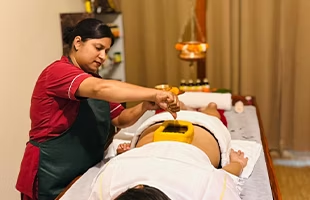
This is a very rejuvenating therapy that not only addresses the root cause but also calms down the symptoms. In this, herbal pastes are applied to the irritated skin. It helps with various symptoms like itching. burning, heat, etc. The herbs depend on the type of the patient's body.
- Parishheka
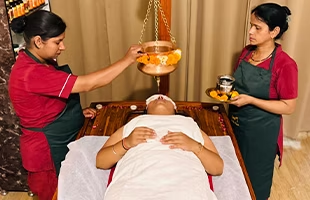
In this, medicated Ayurvedic liquids are prepared and poured on the affected area. It helps in calming down the irritated skin and reducing the burning during eczema.
- Takradhara
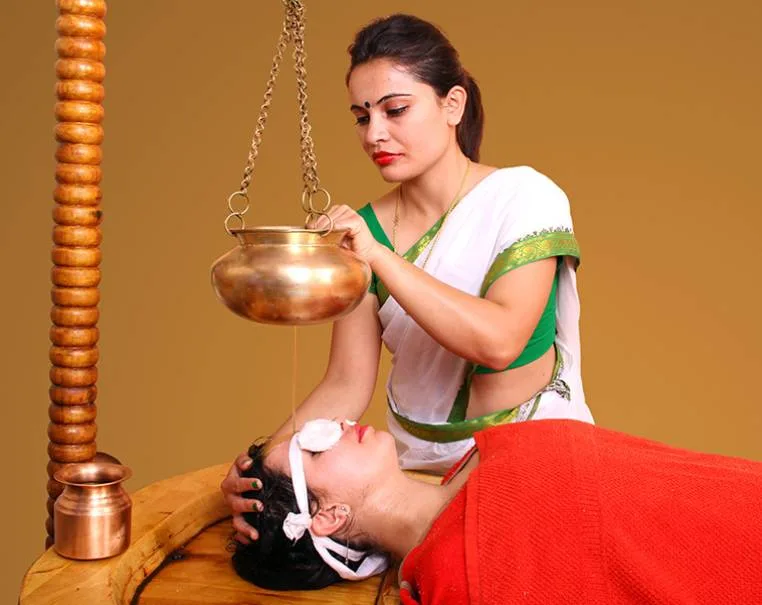
Takradhara is another wonderful Ayurveda therapy for eczema. It helps in reducing stress and emotional disturbance, which are the major causes of eczema. It helps in pacifying pitta dosha and improving sleep quality.
What are the best Ayurvedic Herbs for Eczema?
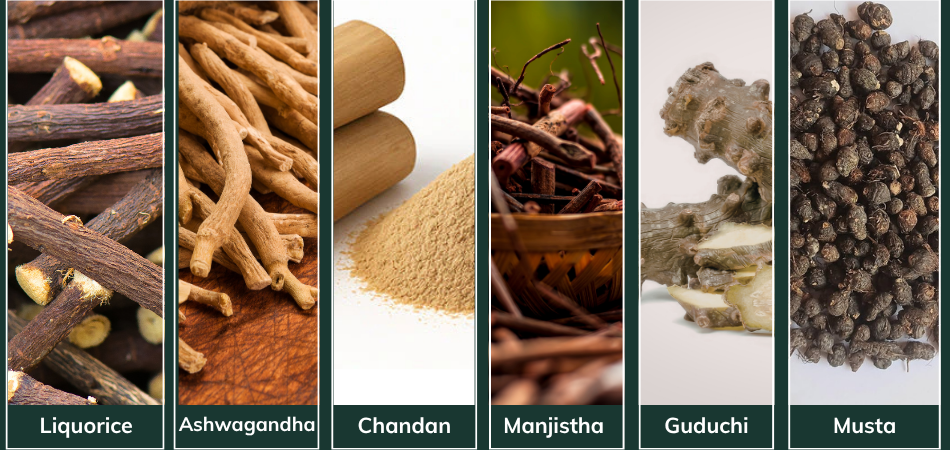
The herbs in Ayurveda are used according to the dosha type of eczema. Not one herb fits all types of eczema. Here are some of the best herbs for eczema as per the dominance of dosha:
-
Herbs for Vata-related Eczema
- Liquorice
Liquorice is also known as Yashtimadhu. It helps in vata-type eczema. It calms down the symptoms of vata eczema, like dryness, irritation, and comforts the skin naturally.
- Ashwagandha
This is a wonderful herbal medicine for eczema that occurs due to excessive vata. Ashwagandha helps in calming down the stress that is the main reason for imbalanced vata and comforts the skin in the most natural way. These herbs can also be used for a broader level of treatment.
- Herbs for Pitta-related Eczema
- Chandan
Chandan, or sandalwood, has extreme cooling effects. It has been used since ancient times to cure pitta-related eczema. Pitta causes excessive burning and redness on the skin. Chandan helps in reducing the redness and curing the symptoms.
- Manjistha
This is one of the best herbs that offers good skin support. It has been used traditionally to treat pitta-related eczema. It offers healthy skin by balancing the pitta dosha in the body and reducing the excessive heat.
- Herbs for Kapha-related Eczema
- Guduchi
Guduchi or giloy has been a boon to the people trying to increase natural immunity. Guduchi helps in treating kapha-related disorders, including eczema. It helps in balancing kapha due to its healing nature and strengthens the body against eczema.
- Musta
Also known as nutgrass, this is another great herb that helps in relieving Kapha-related eczema. It removes dampness, heaviness, and laziness from the body. It works by calming down Kapha and fighting symptoms like thickness and moisture. It also offers overall well-being.
What are the Ayurvedic home remedies for eczema?
There are some home remedies that can support you during the Ayurvedic treatment for eczema. Some of the most common home remedies are as follows:
- Neem water
Boil the neem leaves in water, cool the water, and use it to clean your eczema gently. Neem is antibacterial and anti-inflammatory in nature and supports skin purification.
- Coconut oil
You can use virgin coconut oil on your eczema if there is too much dryness or crackiness. It helps in treating dry eczema during winter.
- Aloe vera gel
If your eczema is pitta-related and causes too much burning, itching and heat, then you can apply some fresh aloe vera gel on the eczema. It leads to a natural cooling effect.
- Turmeric in Diet
Ayurveda often starts with your kitchen. Using turmeric in your diet can also help in cleansing your body from the inside. Turmeric helps in maintaining good digestion and skin wellness.
What is the best Ayurvedic Diet for Eczema?
Diet plays a very important role in treating any disease in Ayurveda. Ayurveda says that one should eat very carefully to stay healthy.
As per Ayurveda, there are three types of eating habits:
- Sattvic
- Rajasic
- Tamasic
- Sattvic food is fresh and light and vegetarian in nature. These foods are very easy to digest. They offer a balanced and healthy dietary support to the human body. This kind of diet keeps one clean and shields the body from any kind of toxins or infections. A sattvic diet is also good for gut health. And if gut health is good, the overall system works well naturally.
- Overly oily, spicy, junk food that causes excessive heat in the body or can imbalance pitta dosha is known as rajasic food. Ayurveda says that one should avoid rajasic food to stay healthy. Especially during any Ayurvedic treatment, rajasic food is prohibited.
- Processed, stale, dead food, meat, very oily or heavy food is known as tamasic food. This kind of food weakens the digestive agni and leads to dosha imbalance and accumulation of toxins. This can lead to chronic diseases, including eczema.
Eczema Diet in Ayurveda: What to Eat and What to Avoid
What to eat |
What not to eat? |
|---|---|
| Stick to the sattvic diet | Avoid spicy, oily, junk, heavy and fried food |
| Eat seasonal fruits like apples, pomegranates, and papaya for good gut health | Do not eat packed or preserved food |
| Lightly cook green vegetables like ridge gourds, bottle gourds, and pointed gourds | Avoid stale meals, including non-veg |
| Grains like oats, millet and barley also help in eczema | Avoid excessive sugar and or salt |
| During winters, try taking warm vegetable soups, a khichdi diet and light home-cooked food | Sour or overstimulating food should be avoided |
| You can take nuts like almonds and include some amount of desi ghee in your diet | Bad combinations of food, like fish + dairy should not be taken |
| Herbal teas and a good hydration level work well for eczema | Avoid excessive fermented food during eczema |
| Eat cucumber salad during the summer to balance pitta dosha |
Final Thoughts
Eczema can feel very disturbing. It can affect your daily life. Ayurveda is a natural and gentle approach to treating eczema from its root cause. It also protects the body from recurring eczema. Ayurveda is a mix of various steps like Ayurvedic treatment, herbs, panchakarma therapies, diet modifications, lifestyle changes. It also includes stress-calming activities like yoga, meditation, and pranayama.
All these come together to treat eczema. In Ayurveda, eczema is not just treated superficially; your whole body is brought back to balance by balancing doshas and removing toxins from the human body. The Ayurveda treatment for eczema is a gentle way to heal you and give you healthy skin and inner systems! This is why, while treating eczema, you also gain overall well-being.




Comments (0)