Today's lifestyle has made some diseases very common. One of these disorders is thyroid disorder. Today, people of every age are suffering from problems like thyroidism. Due to the harmful effects of chemical-based medicine for such lifelong disorders, people are now seeking natural ways to manage and live with thyroidism. The best part is that Ayurveda treatment for thyroid is offering tremendous benefits to the world today. Ayurveda is the most ancient science and is called the science of life.
This science offers an excellent remedy for managing the thyroid imbalance. Now talking about Rishikesh, it is known as the world's yoga capital. The reason behind it is that Rishikesh breathes healing, which includes yoga and Ayurveda. Rishikesh has become a hub of healing using Ayurveda. People from different parts of the world prefer Rishikesh for wellness, be it yoga, Ayurveda, or other healing courses and treatments. In this blog, we will uncover what causes hypothyroidism and how Ayurveda treats thyroid disorders.
- Understanding Thyroid Disorder
- 1. Hypothyroidism
- 2. Hyperthyroidism
- Ayurvedic diagnosis of thyroidism
- 1. Dosha
- 2. Digestive fire or Agni
- 3. Vital energy or Ojas
- 4. Ama or toxins
- Ayurvedic treatment for thyroid disorder in Rishikesh
- A. Ayurvedic detox therapies for thyroid disorder: Panchakarma
- Best Panchakarma therapies for thyroid disorders in Rishikesh:
- Abhyanga
- Herbal steam therapy or Swedana
- Swedana is very relaxing and rejuvenating as it helps in opening the pores of our body and removing toxins. It also helps in soothing the stiffness. of our muscles and tissues.
- Herbal enema or Basti
- It helps in balancing our Vata Dosha by improving digestion and removing toxins through the stools. It also helps in regulating our hormones.
- Herbal powder massage or Udvartana
- It is also one of the most common Ayurvedic therapies for thyroid disorders given in Rishikesh. It helps in reducing the stubborn fat and relieving the symptoms of hypothyroidism. It also helps in improving the functioning of the lymphatic system of our body.
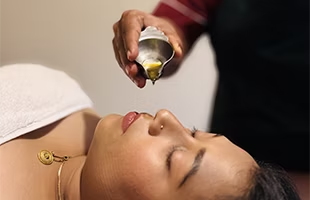
- Herbal nose therapy, or Nasya
- Nasya is one of the best Ayurvedic therapies for thyroid disorders in Rishikesh. Rishikesh offers the best Nasya treatment. It helps in clearing the pathways of our nervous system and head. It helps in reducing anxiety and treating problems like stress, depression, etc. It is very helpful in fighting the cause of hypothyroidism. Panchakarma depends on your body type. Therefore, it is a customised treatment plan given to an individual depending on his or her problems and the root cause.
- B. Ayurvedic Herbs
- C. Breathwork and yoga.
- D. Diet modification
- CONCLUSION
Understanding Thyroid Disorder
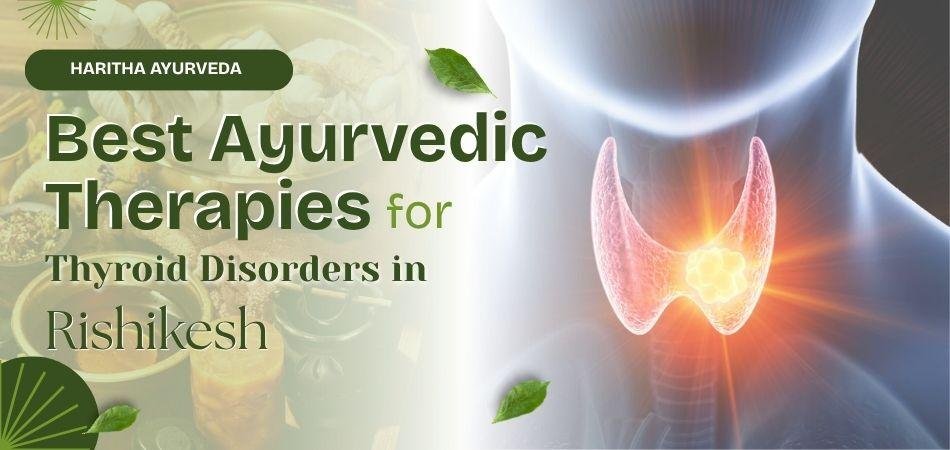
A small gland present in the neck, in the shape of a butterfly, is known as the thyroid. The function of the thyroid gland is to produce hormones like thyroxine, triiodothyronine and calcitonin. In short, it releases the hormones that are responsible for our metabolism, growth and other important functions like how the body uses the energy and more. When the thyroid is imbalanced, the hormone secretion is disturbed. and it leads to several physical, mental and emotional health issues.
The two major types of problems caused by an imbalanced thyroid are:
1. Hypothyroidism
When the thyroid does not produce enough hormone, it is called hypothyroidism or low thyroid. The very common symptoms in people suffering from low thyroid function are feeling exhausted very easily, unnecessary weight gain, feet and hands that are always cold, poor gut health and sluggish digestion, dry skin, dry and rough hair, persistent depression and low mood.
2. Hyperthyroidism
In this case, the thyroid produces excess hormone, which is too much for the body, and then it starts reacting and causing physical ailments. The common symptoms in people suffering from hyperthyroidism or high thyroid are:
- Excessive feeling of anxiety
- Rapid heartbeat
- Unnecessary weight loss
- Persistent tremors in the body, especially in the hands
- Sensitivity to heat and warmth
- Problems like insomnia and poor sleep quality.
In both of the above problems, daily life is badly affected. The thyroid might sound very common, but it needs special and permanent care. Conventional medicines for this problem are also available, but Ayurveda offers a natural support to our thyroid glands and helps in healing them in a very gentle way without affecting any other organs of our body. Being natural, it does not include any chemical-based medicine and works only with Ayurvedic Treatment for thyroid and herbs. This keeps the treatment very safe even in the long term, keeping our body healthy and protected. Ayurveda not only treats or prevents, but also manages and prevents thyroidism, and ensures overall health through the therapies. So let's see how Ayurveda supports thyroid care.
Ayurvedic diagnosis of thyroidism
In this, let us understand how Ayurveda explains thyroidism. Ayurveda says that thyroid dysfunction occurs when there is an imbalance in doshas, which are the bio-energies deciding our traits and controlling our body. Then comes Agni, which is known as the digestive fire. When Agni is disturbed, thyroidism occurs. And the last one is our vital energy called Ojas. Apart from this, the build-up of toxins or AMA also leads to problems like thyroidism. Therefore, the proper diagnosis is conducted to determine what kind of imbalance is causing thyroidism. The major Ayurvedic principles of thyroid disorder are as follows:
1. Dosha
Our body has three types of dosha, vata, pitta and kapha. Every individual has a different dosha constitution in their body. That is why we are all different in traits, behaviours, looks and inner selves. When any of these doshas are disturbed, thyroid occurs.
- Vata dosha
It is responsible for governing our movement, nervous system, and how our body communicates. When there is an imbalance in vata dosha, it can lead to hypothyroidism and can give symptoms like dryness, hair loss, fatigue, gut disorders like constipation, and sluggishness in the body and mind.
- Pitta dosha
It is known to control our metabolism. It also regulates our body heat and is responsible for producing energy. When pitta is aggravated, problems like hyperthyroidism occur, and the symptoms of pitta-related hyperthyroidism are too much anxiety, feeling of irritability, excessive heart rate, excessive sweating, and unnecessary weight loss.
- Kapha dosha
Now this dosha is responsible for how we look, what our body structure is, how stable we are, and our body fluids. When the body fluids or kapha are increased or imbalanced, our metabolism starts getting slower, and it leads to an unnecessary feeling of laziness. This also leads to unwanted weight gain, swelling in the body, and retention of fluids, and often becomes a cause of hypothyroidism.
2. Digestive fire or Agni
A metabolic fire that helps in converting food into energy by helping the body to absorb nutrients is known as Agni or digestive fire. We can also call it metabolic fire. When our digestive fire, or Agni, is weak or sluggish, it can lead to hypothyroidism due to poor metabolism. Similarly, if Agni is overactive, then it leads to hyperthyroidism because it increases our metabolism abnormally. That is why Ayurveda always comes along with a proper diet chart to maintain the Agni.
3. Vital energy or Ojas
Ojas means our natural immunity and vitality. Thyroid disorders like Hashimoto's disease occur due to low vital energy or low Ojas. In this, our vital energy starts depleting, leading to autoimmune thyroid disorders. Therefore, Ayurvedic treatment for thyroid includes therapies that maintain our Ojas.
4. Ama or toxins
Ama or toxins, when piled up in the body, can lead to weak digestive power. and a poor lifestyle. Ama always blocks our energy channels and interrupts the balance of the endocrine glands. Now, Ayurveda also detects Ama in order to start Ayurvedic treatment. If Ama is the cause of thyroid, then various detox therapies for thyroid, like Panchakarma for thyroid, are given to the patient.
Ayurvedic treatment for thyroid disorder in Rishikesh
Rishikesh offers the most authentic Ayurvedic Retreat in Rishikesh. The Ayurvedic treatment for thyroid disorder in Rishikesh includes various Ayurvedic therapies, medicines, and wellness sessions like yoga and pranayama. All this combines to offer a holistic method to heal and manage thyroidism. Let's see what the Ayurvedic treatment for thyroids in Rishikesh !
A. Ayurvedic detox therapies for thyroid disorder: Panchakarma
Panchakarma is the most effective Ayurvedic therapy for thyroidism. It includes five detox therapies that help in flushing out the deep-seated ama or toxins from the body naturally. This therapy helps in balancing doshas and other vital energies of our body.
Best Panchakarma therapies for thyroid disorders in Rishikesh:
Rishikesh offers the following most authentic Ayurvedic therapies for thyroid in its treatment:
-
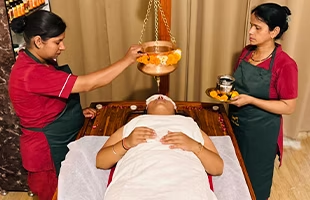
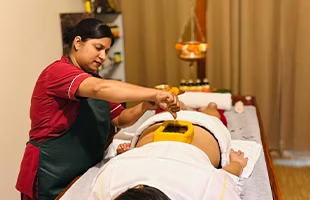
Abhyanga
Abhyanga is a herbal body massage that uses medicated oils. It helps in improving the blood circulation, relaxing the nervous system, and reducing inflammation and stress.
-
Herbal steam therapy or Swedana
Swedana is very relaxing and rejuvenating as it helps in opening the pores of our body and removing toxins. It also helps in soothing the stiffness. of our muscles and tissues.
-
Herbal enema or Basti
It helps in balancing our Vata Dosha by improving digestion and removing toxins through the stools. It also helps in regulating our hormones.
-
Herbal powder massage or Udvartana
It is also one of the most common Ayurvedic therapies for thyroid disorders given in Rishikesh. It helps in reducing the stubborn fat and relieving the symptoms of hypothyroidism. It also helps in improving the functioning of the lymphatic system of our body.
-
Herbal nose therapy, or Nasya
Nasya is one of the best Ayurvedic therapies for thyroid disorders in Rishikesh. Rishikesh offers the best Nasya treatment. It helps in clearing the pathways of our nervous system and head. It helps in reducing anxiety and treating problems like stress, depression, etc. It is very helpful in fighting the cause of hypothyroidism. Panchakarma depends on your body type. Therefore, it is a customised treatment plan given to an individual depending on his or her problems and the root cause.
B. Ayurvedic Herbs
Ayurvedic practitioners use different Ayurvedic herbs and medicines in order to support the treatment of thyroid in Ayurveda. Some of the most common herbs given during thyroid treatment in Rishikesh are:
1. Guggulu: It supports metabolism and helps in weight management.
2. Ashwagandha: It helps in fighting stress and anxiety and supporting and balancing thyroid hormones.
3. Brahmi: It targets the brain and nervous system and creates a balance. It is very helpful in hyperthyroidism.
4. Shilajit: It helps in boosting our vital energies and supporting the health of our endocrine system.
5. Punarnava: It helps in reducing the inflammation, pain and swelling in our body occurring as symptoms of thyroid. It is very helpful in fighting fluid retention that happens due to excessive kapha and treating problems like goitre.
6. Triphala: It is a wonderful detox powder and detox herb that helps in cleaning the digestive organs. It also removes the toxins from our gut.
C. Breathwork and yoga.
Now, another important aspect of Ayurvedic treatment for thyroid is yoga and pranayama.
- Yoga and pranayama support the treatment of thyroid in Ayurveda.
- Yoga and breathwork help in dealing with stress and balancing our nervous system.
- They also give different physical, mental and emotional benefits that support the treatment of thyroid through Ayurvedic therapies and medicines.
- Yoga and breathwork are an important part of any Ayurvedic treatment.
- The various yoga poses and breathing techniques depend on the individual's body type and the cause of the problem.
Different people are given different lines of treatment, and different line of treatment includes different yoga and breathwork. The most common yoga and breathing practices used for thyroid control are:
- Sarvangasana or shoulder stand
- Matsyasana or fish pose
- Setubandhasana or bridge pose
- Pranayama, like anulom vilom and bhramari, for calming the nervous system.
Rishikesh is the world's yoga capital, and it is known as an expert in yoga. Ayurveda, when blended with the yoga of Rishikesh, gives unmatched benefits.
D. Diet modification
Ayurveda not only believes in giving medicines for the problem, but it also includes various aspects of treatment, one of which is diet control. Diet is very important while undergoing an Ayurvedic treatment. Ayurveda says that one should eat a sattvic diet or a diet that keeps one's body constitution balanced. Therefore, a customised diet chart is given to every patient with thyroid.
- Diet for low thyroid or hypothyroidism
An Ayurvedic diet for hypothyroidism includes the following:
- Warm food that is easy to digest.
- Spices like black pepper and ginger.
- Metabolism boosters.
- Cold and raw foods are prohibited.
- Enough water throughout the day.
2. Diet for Ayurvedic diet for hyperthyroidism or high thyroid- Cooling foods like coconut water or cucumber are prescribed.
- Spicy and hot foods are prohibited.
- Calming herbs are given.
- Calming herbal teas are given.
- Sweet fruits and dairy should be consumed in moderation.
- Lifestyle changes
- Various lifestyle changes are suggested to balance thyroid, like waking up early right before sunrise.
- Starting the day with mindfulness sessions of yoga, meditation and pranayama
- Switching to herbal teas for natural detox
- Gentle oil massage or abhyanga therapy sessions
- Balanced meal at the same time
- Early bedtime to allow hormone reset.
CONCLUSION
Ayurvedic treatment of thyroid is divided into two parts: Ayurvedic treatment of hyperthyroidism and Ayurvedic treatment of hypothyroidism. There are other Ayurvedic treatment and therapy plans for problems like goitre, Hashimoto's, and other thyroid-related problems. Now talking about the Ayurvedic treatment for thyroid disorders, the whole treatment plan contains various The whole treatment plan is divided into various parts, including Ayurvedic therapies for thyroid, Ayurvedic herbs for thyroid, Ayurvedic massages for thyroid, Ayurvedic diet for thyroid, and Ayurvedic routine and lifestyle for thyroid. When all these come together, then the body starts healing naturally.
It might sound like a lot, but it gives long-term benefits and transforms the way you live. It helps the patient to connect to the patients to connect to their natural roots and heal without depending on any surgery or chemical-based medications. Ayurveda is not a treatment, but it is a lifestyle that cures thyroid and other such problems. Ayurveda will not only treat the thyroid disorder, but also offer overall wellness.


Comments (0)